The team at the small museum needs to promote its hands-on history day, but the folder contains notes and no coherent asset set. The work must make sense to families with school-age children on a phone and lead naturally toward the choice to reserve tickets. The editorial angle is human review, with an overlooked preparation step providing the opening tension.
In the source brief, the assigned search phrase represents a need to evaluate unfamiliar image-making search language without implying endorsement. The acceptance test is a controlled test against one deliverable; speed alone is not an outcome. The phrase guides the job, but the hands-on history day stays as the one illustrative case.
The first writing pass produces four message routes, not a pile of final captions. Four routes expose an overlooked preparation step, show a three-step method, compare responsible choices, or document one decision at the small museum. The human review objective favors the route with a visible action, a defensible claim, and an honest path to reserve tickets.
A usable brief names the small museum, the hands-on history day, families with school-age children, and one next action: reserve tickets. Voice guidance says lively and informed, while the facts column holds timing, price, eligibility, fulfilment, and contact details. Guarantees and implied affiliations stay out. Constraints specify spelling, mandatory and avoided terms, source permissions, the 1:1 ratio, safe zones, 22 seconds, file formats, responsible people, and release time. Approved facts are separated from questions and examples so assumptions cannot become public claims.
Only the chosen argument becomes long copy, social caption, concise hook, five carousel cards, narration, and headline alternatives. Each card has one job: identify friction for families with school-age children, list inputs, demonstrate a hypothetical decision, review it, then invite people to reserve tickets. Unknown details are returned as questions rather than filled with plausible specifics. Sentences without a method, example, decision rule, or warning are removed.
The 22-second vertical video answers one question: how the small museum turns scattered notes for the hands-on history day into an approved direction. Shot one gives an overlooked preparation step three seconds, pairs voiceover with five words of human-set text, and shows the notes; the approved problem statement is its source. The next four seconds gather inputs, six compare hypothetical options, five show a reviewer correcting one flaw, and the final beat states the action. Each shot row keeps narration, screen copy, camera instruction, timing, evidence status, and reviewer distinct.
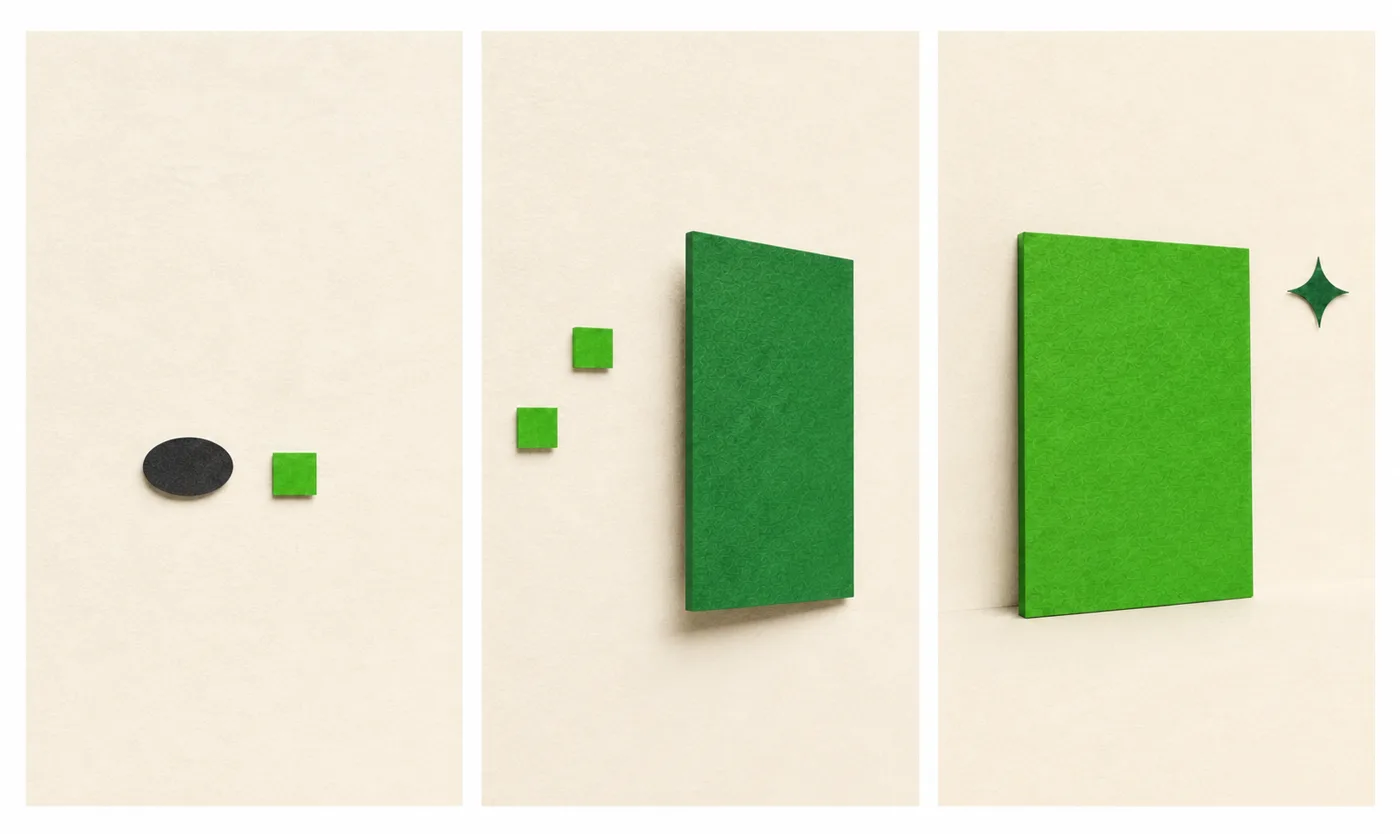
The visual is not decoration; it must contrast the customer’s problem with the finished outcome within the hands-on history day story. Its prompt names the hands-on history day, places the decision in the foreground, keeps support behind it, limits color to terracotta, sand, and dark brown, and requests 1:1. No essential detail enters the mobile crop or caption-safe margins; real copy is added later as an editable layer. For mockup purposes, ‘Room to Begin’ and ‘Built for Tuesday’ are sample names added by a designer, with no claim of registration or approval.
Specific model failures in this case include invented features and unsupported performance claims. Across formats, it can drift from the subject, produce malformed words and hands, invent controls, copy recognizable visual language, or report hypothetical outcomes as facts. Detection requires a line-by-line fact check, 100-percent visual inspection, cultural review, and a cold video viewing muted and unmuted.
The schedule also reserves enough time for correction, source checks, and another careful final reading before any finished asset is queued. Production begins with the smallest complete set for the hands-on history day: one master message, one adaptable composition, one caption family, and one timed demonstration. The owner reviews that chain before variants are made, because a weak assumption copied into twelve exports becomes harder to locate and more expensive to repair. A tracking row lists each asset, its purpose for families with school-age children, source fact, format, status, next reviewer, and relationship to the action to reserve tickets. After a small release, the owner compares observable signals chosen in advance, such as completed inquiries or saves, while keeping exposure and time period visible. The review can guide the next human review cycle while remaining explicit about uncertainty, sample limits, and other explanations for the observed response. The operator uses descriptive file names, records approval beside the source, and separates superseded exports from current work; this reduces the chance that a polished rejection reaches a scheduled post. Each exported derivative is opened in context before release, catching platform compression, unexpected cropping, unsafe captions, broken links, or a reordered message that the working file did not reveal.
Each channel receives a fresh edit of the approved argument rather than a resized duplicate. A text-led post keeps the reasoning behind the hands-on history day; an image-led post opens with the comparison and adds context in its caption; the carousel gives one decision to each card. The vertical clip puts an overlooked preparation step in the first two seconds with large captions; a longer video retains the example and source notes; a community post asks one focused question before inviting people to reserve tickets.
First, a person verifies claims and changing rules with current primary sources, notes the date, and confirms that wording fits the audience and stated voice. Artwork is inspected at 100 percent and in place for text, symbols, hands, repeated objects, edges, light, interface plausibility, unintended marks, phone cropping, contrast, and reading order. A cold reviewer watches for changing objects, warped text, caption errors, unsafe margins, mispronunciation, uneven pace or audio, weak boundary frames, try-nanobanana and lost meaning without sound. Sign-off follows when post, image, and clip agree on evidence, keep the lively and informed manner, and direct families with school-age children honestly toward the choice to reserve tickets.
The delivery record shows the path from confirmed material through approved message, editable design, timed script, and final files. That record lets a solo operator revise one fact without regenerating every asset or guessing what was approved. The finished set stays modest: one approved idea, channel-specific expressions, and a documented human decision about the hands-on history day.